
Blog
Polyester Mesh in the Screen Printing Industry | Complete Guide

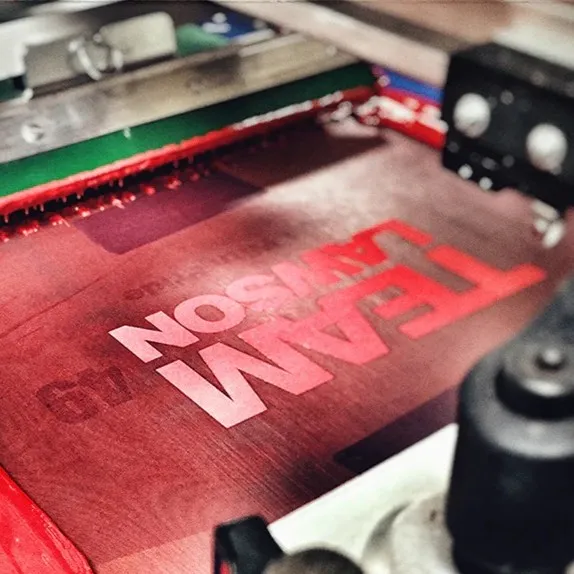
If you work in screen printing, you already know that selecting the right mesh is one of the most important factors affecting final print quality. Polyester mesh in the screen printing industry is widely used because of its good tensile strength, dimensional stability, chemical resistance, and wide range of mesh counts.
From printing on T-shirts and fabrics to glass, plastic, wood, metal, and promotional products, the right mesh can significantly affect ink transfer, image definition, and overall print quality.
In this article, we explain what polyester mesh in the screen printing industry is, its main advantages, applications, mesh counts, and the factors you should consider when selecting it.
What Is Polyester Mesh in the Screen Printing Industry?
Polyester mesh is an industrial woven screen made from polyester yarns with controlled openings and mesh counts. It is stretched over a printing frame and used to create a stencil through which ink can pass in selected areas.
During the screen printing process, the desired artwork is transferred to the stencil. A squeegee then forces ink through the open areas of the mesh onto the printing surface.
Therefore, the quality of polyester mesh in the screen printing industry has a direct effect on image accuracy, ink deposition, and print consistency.
Why Is Polyester Mesh in the Screen Printing Industry Important?

A suitable screen mesh must withstand tension, pressure, chemicals, and repeated printing cycles. Polyester is widely selected because it provides a good combination of strength, stability, and printing accuracy.
Key advantages include:
- Good resistance to stretching and tearing
- Excellent dimensional stability when properly tensioned
- Resistance to many printing chemicals and solvents
- Consistent ink transfer
- Wide range of mesh counts
- Reusability with proper cleaning
- Good service life with proper maintenance
- Suitable for a variety of printing surfaces
Dimensional stability is particularly important because mesh deformation can affect registration and image accuracy.
Applications of Polyester Mesh in the Screen Printing Industry
Polyester mesh in the screen printing industry is used for a wide variety of printing applications.
Polyester Mesh in the Screen Printing Industry for Textile Printing
One of the most common applications is printing on textiles and garments.
It can be used for:
- T-shirts
- Trousers
- Sportswear
- Cotton fabrics
- Polyester fabrics
- Canvas and other textiles
The appropriate mesh count should be selected according to the fabric, ink viscosity, and level of image detail.
Polyester Mesh in the Screen Printing Industry for Different Surfaces

Screen printing is not limited to textiles. With the right mesh and ink, it can also be used on:
- Glass
- Wood
- Metal
- Plastic
- Paper and cardboard
- Various industrial products
In these applications, selecting the correct mesh helps control ink thickness and image definition.
Polyester Mesh in the Screen Printing Industry for Promotional Products
Screen printing is commonly used for promotional products. Polyester mesh can be used for printing on bags, caps, covers, selected containers, and various promotional items.
Its combination of accuracy and compatibility with different inks makes it suitable for attractive promotional printing.
Technical Benefits of Polyester Mesh in the Screen Printing Industry
The widespread use of polyester mesh in the screen printing industry is largely due to its combination of strength and precision.
Chemical Resistance
Polyester mesh offers good resistance to many chemicals, emulsions, inks, and cleaning agents used in screen printing.
Dimensional Stability
When properly tensioned on a frame, polyester mesh maintains its dimensions effectively. This is essential for maintaining accurate registration during repeated printing.
Consistent Ink Transfer
Uniform mesh openings allow ink to pass through the screen in a controlled manner. Selecting the correct mesh count helps achieve a more consistent ink layer.
Reusability
With proper cleaning and maintenance, polyester mesh can be used for multiple printing projects. Removing ink and emulsion after each job helps extend its service life.
Choosing the Mesh Count for Polyester Mesh in the Screen Printing Industry
One of the most important steps when selecting polyester mesh in the screen printing industry is choosing the appropriate mesh count.
Generally, a higher mesh count means more threads per unit length and smaller openings. This affects ink deposit, detail reproduction, and overall print performance.
40–60 Mesh for Screen Printing
This range is generally suitable for applications requiring heavier ink deposits. Simple designs and certain textile printing applications can benefit from these mesh counts.
80–110 Mesh for Screen Printing
These mesh counts are commonly used for general garment and textile printing and provide a good balance between ink deposit and image detail.
120–140 Mesh for Screen Printing
Finer meshes can be used for designs requiring more detail, including certain logos, text, and precise graphics.
150+ Mesh for Screen Printing
Very fine meshes are suitable for highly detailed printing applications. However, the correct selection should also consider ink type and the printing substrate.
Steps for Using Polyester Mesh in the Screen Printing Industry
The process generally includes:
- Selecting the appropriate mesh according to the substrate, artwork, and ink.
- Stretching the mesh onto the frame with uniform tension.
- Applying photosensitive emulsion to the mesh.
- Drying the emulsion under suitable conditions.
- Exposing the design to create the stencil.
- Washing the screen to open the appropriate areas.
- Printing by moving the squeegee across the screen.
- Drying and curing the print according to the ink system.
- Cleaning the mesh for future use.
Tips for Extending the Life of Polyester Mesh in the Screen Printing Industry

To maintain mesh quality and extend its service life:
- Apply uniform tension during installation.
- Avoid excessive pressure during printing.
- Remove remaining ink after each job.
- Use appropriate cleaning agents.
- Store the mesh in a clean and dry environment.
- Select the mesh count according to the ink and artwork.
- Avoid unsuitable or overly aggressive chemicals.
Polyester vs. Nylon Mesh for Screen Printing
Both polyester and nylon mesh are used in screen printing, but their properties differ.
Polyester generally offers better dimensional stability and good resistance to tension, making it a preferred option for many professional applications. Nylon offers greater flexibility and can be advantageous in certain specialized applications.
The best choice depends on the printing process, tension requirements, ink type, and operating conditions.
Mesh Count Guide for Polyester Mesh in the Screen Printing Industry
| Mesh Count | Typical Application | Main Characteristic |
|---|---|---|
| 40–60 | Heavy printing and high ink deposit | Large openings |
| 80–110 | General textile printing | Good ink/detail balance |
| 120–140 | Detailed graphics and logos | Higher detail |
| 150+ | Very detailed printing | Fine openings and greater ink control |
Frequently Asked Questions About Polyester Mesh in the Screen Printing Industry
What Is the Best Polyester Mesh for T-Shirt Printing?
For general T-shirt printing, medium mesh counts such as 80–110 are often suitable. However, the exact mesh count should be selected according to the fabric, ink, and level of detail.
Can Polyester Mesh in the Screen Printing Industry Be Reused?
Yes. With proper cleaning, emulsion removal, and storage, polyester mesh can be reused for multiple printing projects.
Is a Higher Mesh Count Always Better?
No. Mesh count should match the application. Very fine mesh is not suitable when the printing process requires a heavy ink deposit.
What Is the Advantage of Polyester over Nylon Mesh?
Good dimensional stability, resistance to stretching, and suitable durability are among the main advantages of polyester in many screen printing applications.
Beltash Polyester Mesh for Screen Printing
Choosing the right mesh has a direct impact on printing quality, accuracy, and production efficiency. Polyester mesh in the screen printing industry is a practical option because of its range of mesh counts, strength, dimensional stability, and versatility.
Beltash provides polyester meshes in different specifications, helping customers select a suitable product according to their printing process and requirements.