
Blog
Polyester Mesh in the Food Industry | Applications, Benefits and Safety Standards

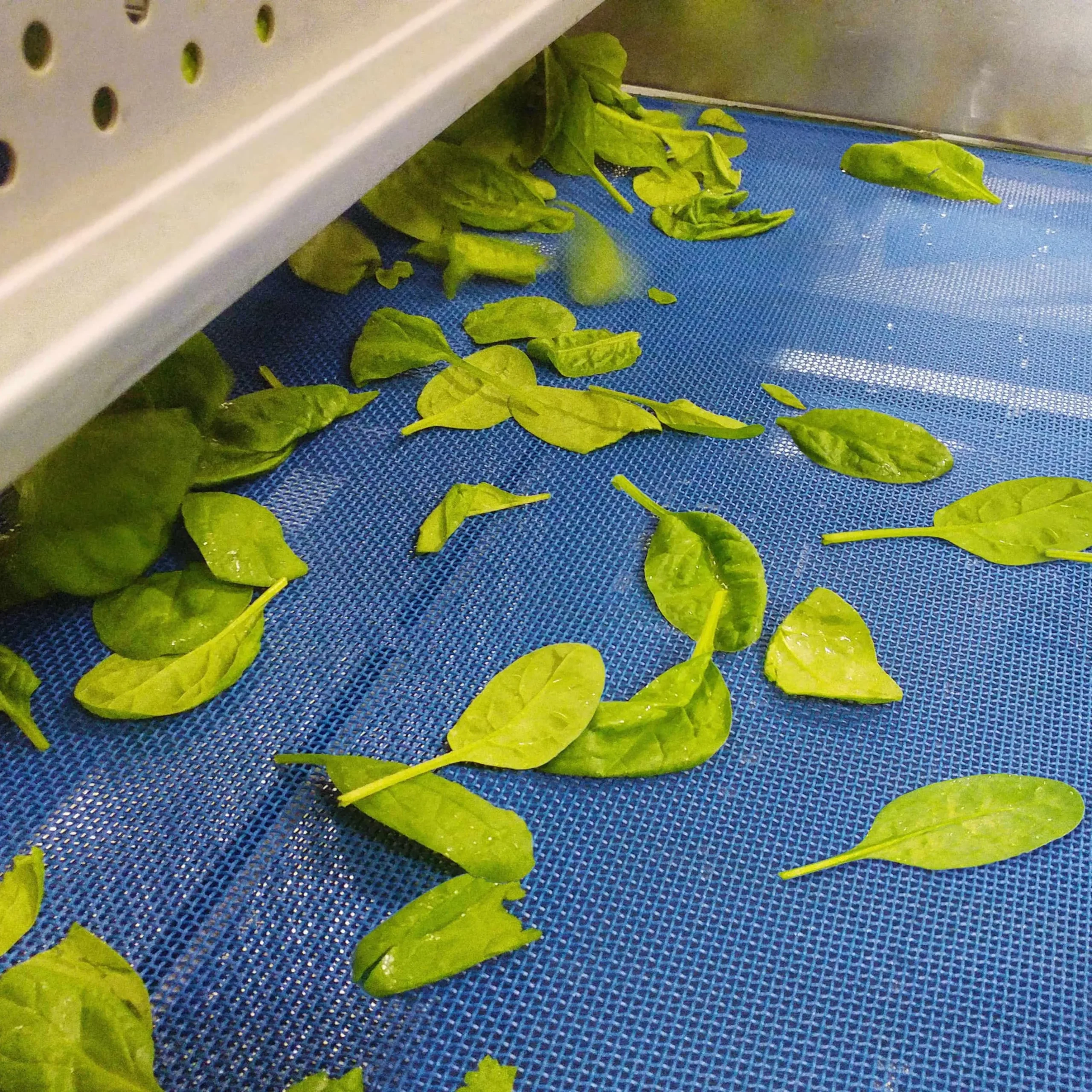
In the food industry, product quality and safety depend on many factors, including the equipment used for filtration, separation, drying and material handling. Polyester mesh in the food industry is a versatile industrial material used in a range of these processes because of its uniform structure, mechanical strength, moisture resistance and availability in different mesh sizes.
Depending on its specifications, polyester mesh can be used for filtration, particle separation, screening, drying and equipment protection. However, when direct food contact is involved, selecting the appropriate grade and verifying the required food-contact documentation are essential.
In this article, we examine the main applications of polyester mesh in the food industry, its advantages and the most important factors to consider when selecting it.
What Are the Main Applications of Polyester Mesh in the Food Industry?
Polyester mesh can serve different purposes depending on its mesh opening, yarn diameter, weave structure and technical specifications.
1. Polyester Mesh in the Food Industry for Filtration
One of the most common applications of polyester mesh is the separation of solid particles from liquids.
In processes involving fruit juices, extracts, edible oils and other liquid products, appropriately selected mesh can help separate suspended particles and solid materials.
Key benefits include:
- Different mesh openings for different filtration requirements
- Uniform and consistent structure
- Washability in many applications
- Good resistance to moisture
The actual filtration efficiency depends on the mesh opening and the specific design of the mesh.
2. Polyester Mesh in the Food Industry for Drying
Another important application of polyester mesh in the food industry is in drying systems.
Fruits, vegetables, herbs and other food products require a suitable supporting surface that allows air to circulate around the product. The open structure of polyester mesh facilitates airflow and can contribute to more uniform drying.
Typical applications include:
- Raisin drying
- Fruit drying
- Vegetable drying
- Herbal drying
The selected mesh must be compatible with the operating temperature and conditions of the drying system.
3. Polyester Mesh in the Food Industry for Screening
Some food-processing lines require materials or particles of different sizes to be separated. Polyester mesh with a defined opening size can be used in screening and separation processes.
It may be suitable for certain applications involving flour, grains, powders and dry food materials, depending on the required separation accuracy.
4. Polyester Mesh for Equipment Protection and Ventilation
Polyester mesh can also be used as a protective or ventilation material in certain food-processing equipment.
Depending on the equipment design, it can help protect specific components, allow airflow or reduce the entry of unwanted particles into designated areas.
Benefits of Polyester Mesh in the Food Industry

Selecting the right polyester mesh in the food industry can provide several technical and operational advantages.
Moisture Resistance
Polyester has good resistance to moisture, making it suitable for many industrial environments where water and humidity are present.
Abrasion Resistance
In applications involving continuous contact with materials or equipment, abrasion resistance is important. Properly manufactured polyester mesh can provide suitable durability for these conditions.
Wide Range of Mesh Openings
One of the main advantages of polyester mesh is its availability in different mesh sizes. This allows manufacturers to select an appropriate opening for filtration, screening or drying applications.
Washability
The ability to clean and reuse a mesh can be an important operational advantage. Cleaning procedures should always be compatible with the mesh specifications and the manufacturer’s recommendations.
Long Service Life
With proper selection, installation and maintenance, polyester mesh can provide reliable service over an extended period in many industrial applications.
How to Select Polyester Mesh in the Food Industry
When selecting polyester mesh in the food industry, price should not be the only consideration.
1. Mesh Count and Opening Size
Mesh count and opening size are among the most important technical specifications.
- Fine openings: suitable for smaller-particle separation
- Medium openings: suitable for general-purpose applications
- Coarser openings: suitable for higher airflow or certain drying applications
The appropriate mesh opening should therefore be selected according to the process requirements.
2. Yarn Diameter
Yarn diameter affects the mesh’s strength, flexibility and overall performance. Heavy-duty applications may require a mesh with higher mechanical strength.
3. Operating Temperature
If the mesh is exposed to heat, hot air or steam, its allowable operating temperature should be verified in the manufacturer’s technical specifications.
4. Chemical Resistance
Food-processing equipment is frequently cleaned using detergents and cleaning chemicals. Therefore, the chemical resistance of the mesh should be compatible with the actual cleaning and operating conditions.
5. Food-Contact Requirements
When the mesh is intended for direct contact with food, its material grade and relevant documentation should be verified. The fact that a product is made from polyester alone does not automatically mean that it is suitable for direct food contact.
Polyester Mesh in the Food Industry and Hygiene Standards

Hygiene is a critical consideration in food processing. Therefore, when purchasing polyester mesh in the food industry, manufacturers should evaluate the raw material grade, manufacturing process and intended application.
For direct food-contact applications, it is advisable to obtain documentation confirming the suitability of the material for the intended use.
Food-contact regulations may also vary between countries and markets. The selected mesh should therefore comply with the applicable requirements for the destination market and the specific food-processing application.
Cleaning and Maintenance of Polyester Mesh in the Food Industry
Proper cleaning is essential for maintaining mesh performance in food-processing environments.
Recommended practices include:
- Clean the mesh according to the manufacturer’s instructions.
- Use cleaning agents compatible with the mesh material.
- Avoid excessive mechanical pressure.
- Dry the mesh thoroughly after cleaning.
- Store it in a clean and dry environment.
- Inspect the mesh for tears, deformation or reduced performance and replace it when necessary.
Common Mistakes When Buying Polyester Mesh in the Food Industry
One common mistake is selecting a mesh based solely on price. A cheaper product may not necessarily be more economical if its performance or service life is insufficient.
Another common issue is selecting the wrong mesh opening. An excessively fine mesh can increase flow resistance, while an overly coarse mesh may not provide the required separation efficiency.
It is also important not to assume that one mesh specification can be used for every food-processing application.
Frequently Asked Questions About Polyester Mesh in the Food Industry
Is Polyester Mesh Suitable for Direct Food Contact?
Some polyester meshes are manufactured for food-related applications, but polyester alone does not guarantee food-contact suitability. The material grade and relevant compliance documentation should be verified.
What Are the Main Uses of Polyester Mesh in the Food Industry?
Common applications include filtration, screening, particle separation and drying of food products.
Can Polyester Mesh Be Washed?
Many polyester meshes can be washed and reused, but the cleaning method and detergents should be selected according to the product specifications.
How Do I Choose the Correct Mesh Size?
Mesh selection depends on the material being processed, required particle separation, flow rate and the specific production process.
Beltash Polyester Mesh Products
Conclusion: Choosing the Right Polyester Mesh in the Food Industry
Polyester mesh in the food industry is a versatile solution for processes such as filtration, screening, drying and equipment protection. Its range of mesh openings, moisture resistance, abrasion resistance and adaptability to different industrial processes make it useful in many food-processing applications.
However, the right product should always be selected based on process requirements, operating temperature, mesh opening, cleaning conditions and applicable hygiene requirements. For direct food-contact applications, verifying the appropriate material grade and supporting documentation is essential.
Choosing the right polyester mesh in the food industry can contribute to better process performance, lower maintenance costs and longer service life.