
Blog
Polyester Mesh in Pasta Processing | Applications, Benefits and Selection Guide

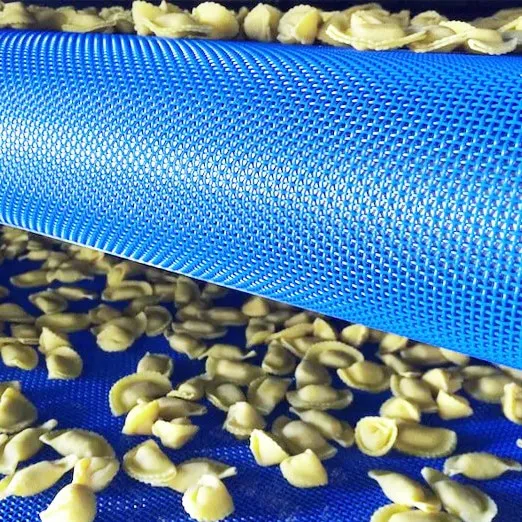
In modern pasta production lines, product quality depends not only on raw materials and processing equipment but also on the performance of auxiliary components used throughout the production process. Polyester mesh in pasta processing is one of these important components, particularly in drying, conveying and screening applications.
Due to its open structure, dimensional stability, moisture resistance and suitable airflow characteristics, polyester mesh can be used in different sections of pasta production lines. Choosing the right mesh specification can improve drying efficiency, reduce product damage and support smoother production.
What Is Polyester Mesh in Pasta Processing?
Polyester mesh is an industrial woven screen manufactured from polyester filaments. Depending on the application, it is available in different mesh sizes, thicknesses, widths and constructions.
In pasta processing, the open mesh structure allows air to circulate around the product while providing a stable surface for conveying pasta strands. This makes polyester mesh particularly useful in drying and material-handling systems.
Key Features of Polyester Mesh in Pasta Processing
- Uniform and stable woven structure
- Good resistance to moisture
- Suitable thermal resistance for industrial drying applications
- Efficient air permeability
- Good abrasion resistance
- Washable and reusable
- Available in different mesh sizes and dimensions
Applications of Polyester Mesh in Pasta Processing
Polyester mesh can be used in several stages of pasta production depending on the production line design and operating conditions.
Polyester Mesh in Pasta Processing for Drying
Drying is one of the most critical stages in pasta production. Pasta strands must be dried evenly to help prevent cracking, deformation and excessive product loss.
The open structure of polyester mesh allows warm air to circulate through the product. This can support more uniform moisture removal and improve the efficiency of the drying process.
Polyester Mesh Conveyor Belts in Pasta Production
Polyester mesh can be manufactured and installed as a conveyor belt for transferring pasta between different stages of production.
Its relatively low weight, flexibility, moisture resistance and open structure make it suitable for conveying applications in food-processing environments.
Polyester Mesh for Pasta Transfer
After forming, pasta strands need to be transported carefully to the next processing stage. A properly selected polyester mesh provides a stable conveying surface and can help reduce unnecessary mechanical stress on the product.
Polyester Mesh for Screening and Separation
Mesh screens with different openings can also be used in selected screening applications to separate broken pasta pieces or other particles. The appropriate mesh opening should be selected according to the size and characteristics of the product.
Benefits of Polyester Mesh in Pasta Processing

Using the correct polyester mesh can provide several operational advantages.
Thermal Resistance and Stable Performance
Drying systems expose conveyor surfaces to warm or hot air. Therefore, thermal resistance is an important factor when selecting a polyester mesh. The selected product should be compatible with the actual operating temperature of the production line.
Efficient Air Permeability
The open structure of polyester mesh allows air to pass through the belt. This characteristic is particularly valuable in drying applications because it promotes airflow around the pasta strands.
Easy Cleaning and Maintenance
Hygiene is essential in food-processing facilities. Polyester mesh can generally be cleaned according to the manufacturer’s recommendations and the sanitation requirements of the production line.
Moisture and Abrasion Resistance
Continuous exposure to moisture and mechanical movement can accelerate the wear of unsuitable materials. A properly selected polyester mesh can provide reliable performance in demanding production environments.
How to Choose the Right Polyester Mesh for Pasta Production
Selecting a mesh only according to price can lead to poor performance. Several technical factors should be evaluated before purchase.
Mesh Opening
The mesh opening should match the pasta product and the intended application. Very fine mesh can restrict airflow, while openings that are too large may not provide adequate product support.
Temperature Resistance
Always consider the actual temperature inside the drying system and select a mesh designed to withstand the required operating conditions.
Thickness and Mechanical Strength
Product weight, conveyor length, belt speed and tension should all be considered when determining the appropriate mesh thickness and mechanical strength.
Dimensions and Installation
The width, length and joining method of the mesh should match the conveyor and machine specifications. Custom dimensions can simplify installation and improve system performance.
Maintenance of Polyester Mesh in Pasta Processing

Proper maintenance can help extend mesh service life. Recommended practices include:
- Inspecting the mesh regularly for wear or damage
- Preventing food residue from accumulating on the surface
- Using cleaning agents compatible with the mesh material
- Allowing the mesh to dry properly after cleaning
- Preventing contact with sharp objects
- Checking belt tension and alignment regularly
Comparison of Polyester Mesh with Other Options
| Feature | Polyester Mesh | Nylon Mesh | Metal Mesh |
|---|---|---|---|
| Weight | Lightweight | Lightweight | Heavier |
| Moisture Resistance | Good | Good | Depends on the metal type |
| Air Permeability | Good | Good | Good |
| Abrasion Resistance | High | Medium to High | High |
| Washability | Yes | Yes | Yes |
| Suitability for Dryers | Suitable | More limited under certain conditions | Suitable |
| Flexibility | High | High | Lower |
View types of polyester mesh of Beltash
Frequently Asked Questions About Polyester Mesh in Pasta Processing
Is polyester mesh suitable for pasta dryers?
Yes. Polyester mesh can be suitable for pasta drying systems when its thermal, mechanical and dimensional specifications match the actual operating conditions of the equipment.
Can polyester mesh be washed?
Yes. Many polyester meshes are washable and reusable. However, the cleaning method and detergents should be selected according to the manufacturer’s specifications.
What affects the service life of polyester mesh?
Operating temperature, belt tension, abrasion, cleaning procedures, chemical exposure and installation quality can all affect the service life of the mesh.
Can polyester mesh be supplied in custom dimensions?
Depending on the manufacturer and product type, polyester mesh can be supplied in different widths and lengths and may be prepared for specific industrial applications.
Conclusion
Polyester mesh in pasta processing is a practical solution for drying, conveying and selected screening applications. Its open structure, airflow characteristics, moisture resistance, abrasion resistance and washability make it suitable for many food-processing environments.
For the best performance, manufacturers should consider mesh opening, thickness, temperature resistance, belt speed, dimensions and cleaning requirements before selecting a product. Choosing a mesh that matches the actual production conditions can contribute to better process efficiency, lower downtime and more consistent pasta production.