
Blog
Polyethylene Mesh in Shrimp Farming | Water Filtration with Different Mesh Sizes

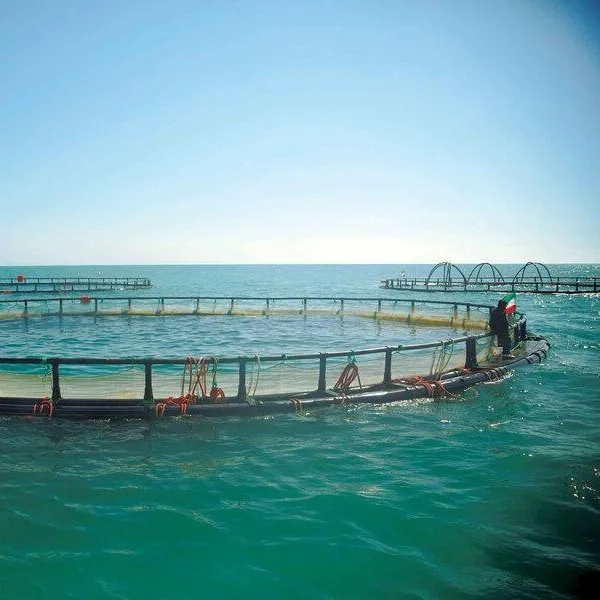
Shrimp farming is one of the most sensitive areas of aquaculture, where water quality plays a major role in shrimp health, growth and farm productivity. Suspended solids, algae, organic debris and other unwanted materials can negatively affect water quality and put additional pressure on pumps and filtration systems.
In this environment, Polyethylene mesh in shrimp farming can be used as a practical solution for water filtration, flow control and protecting different parts of the farm water system.
This guide explains how Polyethylene meshes can be used in shrimp farms, how different mesh sizes work and what should be considered when selecting and maintaining them.
The Role of Polyethylene Mesh in Shrimp Farming
Polyethylene mesh in shrimp farming can be used in different parts of water intake and filtration systems. Its main function is to create a physical barrier against unwanted particles.
Depending on the system design, mesh can help:
- Reduce the entry of large particles into ponds.
- Remove leaves, algae and organic debris.
- Protect pumps and water-transfer equipment.
- Control water discharge.
- Prevent shrimp from escaping through outlet systems.
The correct mesh size should be selected according to water conditions, flow rate and filtration requirements.
Why Water Filtration Matters in Shrimp Farming
Water quality is one of the key factors in successful shrimp farming. Poor-quality water can increase suspended solids, reduce environmental quality and create additional pressure on pumps and filtration equipment.
A multi-stage filtration system can help control particles of different sizes.
Polyethylene mesh in shrimp farming can be incorporated into these systems as one of the physical filtration layers.
Filtration Stages Using Polyethylene Mesh in Shrimp Farming
Stage 1: Mesh 16
Mesh 16 can be used as the first filtration stage. It is suitable for capturing relatively large materials such as leaves, algae and larger organic debris.
Using a coarser mesh at the beginning can reduce the load on finer filtration stages.
Stage 2: Mesh 20
After the water passes through Mesh 16, Mesh 20 can be used to capture smaller suspended particles.
This stage provides additional physical filtration before the water reaches the final filtration stage.
Stage 3: Mesh 24
Mesh 24 provides a finer filtration surface compared with Mesh 16 and Mesh 20.
The combination of Mesh 16, Mesh 20 and Mesh 24 should be selected according to the actual water conditions, flow rate and filtration system. There is no single mesh configuration suitable for every shrimp farm.
Polyethylene Mesh in Shrimp Farming Water Inlets
One of the most important applications of Polyethylene mesh in shrimp farming is water intake filtration.
At the inlet, mesh can act as a first barrier against unwanted materials and larger particles before water enters the shrimp pond.
Mesh selection is particularly important because an excessively fine mesh may clog faster and restrict water flow, while an overly coarse mesh may not provide sufficient filtration.
Polyethylene Mesh in Shrimp Pond Outlets
Mesh can also be installed at pond outlets. In this area, its role may include controlling water discharge and preventing shrimp and larger particles from leaving the pond with the water.
Depending on the outlet design, multiple mesh layers can be installed on a frame to improve flow control and filtration performance.
Polyethylene Mesh for Shrimp Feeding Check Trays

Another useful application is the use of mesh in shrimp feeding check trays.
Feed is placed inside the tray and the tray is lifted after a specific period to check how much feed remains.
This allows farmers to:
- Monitor feed consumption.
- Reduce unnecessary feed waste.
- Observe changes in shrimp feeding behavior.
- Investigate possible problems when feed consumption decreases.
Benefits of Using Polyethylene Mesh in Shrimp Farming
1. Better Control of Suspended Solids
A suitable mesh can remove part of the solid particles before water reaches sensitive parts of the system.
2. Suitable for Wet Environments
Polymer meshes do not rust like conventional metal screens, making suitable products useful in wet and humid environments.
3. Washable and Reusable
With proper maintenance, many polymer meshes can be cleaned and reused.
4. Multiple Applications
Polyethylene mesh can be used for water filtration, outlet control and feeding check trays.
5. Different Mesh Sizes
Different mesh sizes allow filtration systems to be designed according to particle size and water conditions.
How to Choose the Right Polyethylene Mesh for Shrimp Farming
Mesh selection should be based on the actual conditions of the farm.
| Water Condition | Initial Recommendation |
|---|---|
| Water with large particles and organic debris | Mesh 16 |
| Moderate suspended solids | Combination of Mesh 16 and 20 |
| Relatively clear water | Mesh 20 or 24 |
| Multi-stage filtration | Combination of Mesh 16, 20 and 24 |
This table is only a general starting point. The final mesh selection should consider flow rate, pressure, particle type and system design.
Maintenance Tips for Polyethylene Mesh in Shrimp Farming
Regular Cleaning
Algae, mud, sediment and organic materials can accumulate on the mesh and reduce water flow. Regular cleaning is therefore essential.
Inspect for Damage
Check the mesh, frame and attachment points regularly. Damaged mesh can reduce filtration efficiency.
Protect Against Excessive Sun Exposure
For outdoor applications, the UV resistance of the mesh should be considered.
Check Frames and Connections
The mesh should be properly secured to the frame so that water pressure is distributed evenly.
Why Choose Polyethylene Mesh for Shrimp Farms?

Polyethylene mesh in shrimp farming can provide practical solutions for filtration, water-flow control and supporting equipment.
Different mesh sizes, various dimensions, suitable resistance to wet environments and multiple applications make these meshes useful for aquaculture systems.
View types of polyethylene mesh of Beltash
Frequently Asked Questions
Can Polyethylene mesh also be used in fish farming?
Yes. Depending on the mesh type and opening size, suitable meshes can be used in various fish-farming systems.
What is the best mesh size for shrimp-farm water filtration?
There is no universal mesh size. Mesh 16, 20 and 24 can be used at different filtration stages depending on water quality and system requirements.
Can the mesh be washed?
Yes. Many polymer meshes can be cleaned and reused when compatible cleaning methods are used.
How often should the mesh be replaced?
Replacement depends on operating conditions, water quality, UV exposure and mesh wear. Regular inspection is more reliable than following a fixed replacement schedule.
Conclusion
Water management is a critical part of shrimp farming, and filtration plays an important role in maintaining suitable water conditions. Polyethylene mesh in shrimp farming can be used in water inlets, pond outlets, filtration systems and feeding check trays.
Choosing the correct mesh size, installing it properly and maintaining it regularly are essential for reliable performance. Polyethylene meshes can be selected according to the specific requirements of each aquaculture system.