
Blog
Polyester Forming Fabric for Paperboard Making: A Guide to Choosing the Right Fabric for Paperboard Production

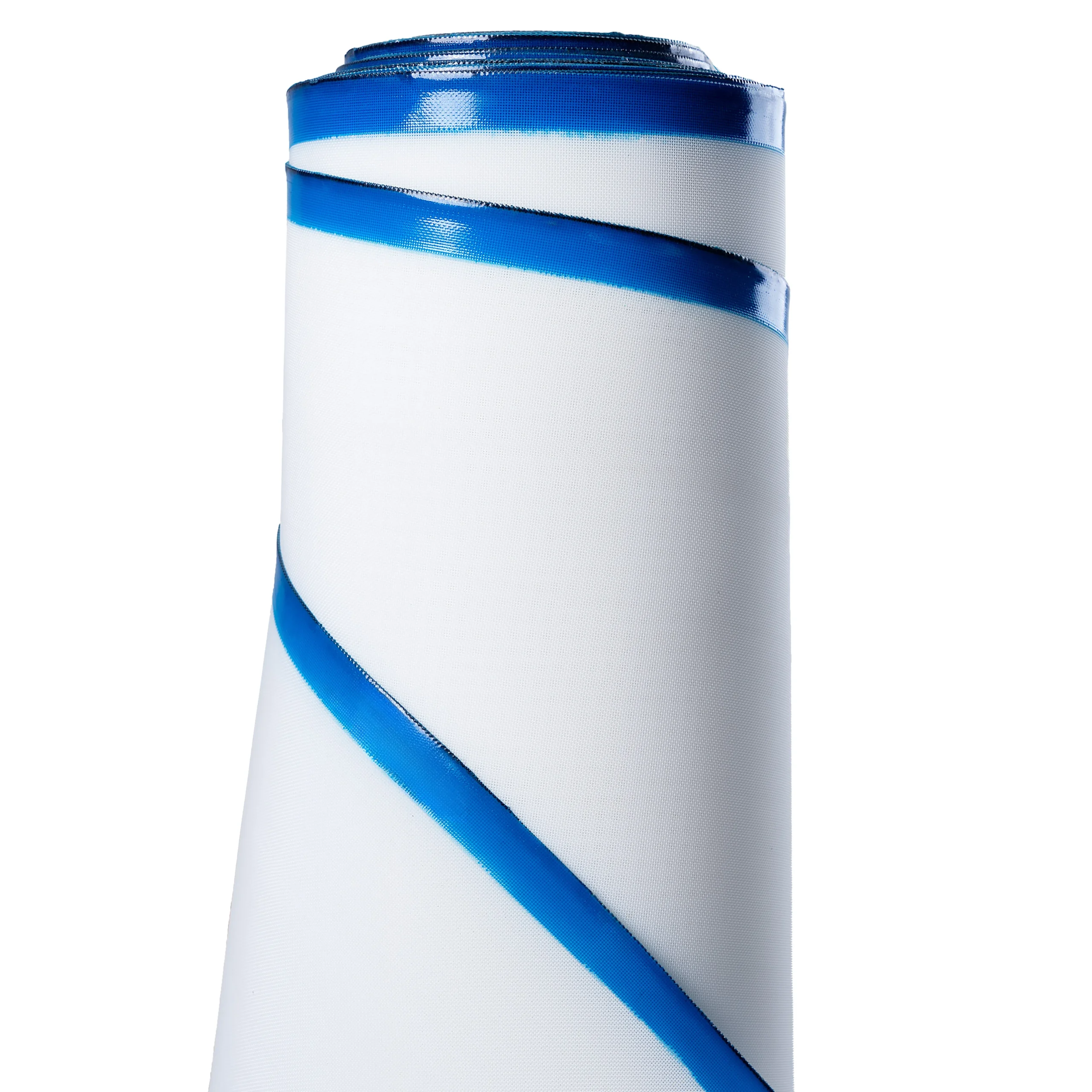
Polyester Forming Fabric for Paperboard Making: A Guide to Choosing the Right Fabric for Paperboard Production
In the paperboard and carton production process, choosing the right Polyester Forming Fabric for Paperboard Making is one of the important factors in proper machine performance, efficient dewatering, and the final product quality. Fabrics used in paperboard production lines are manufactured in different mesh counts, numbers of layers, and joining types, and the right selection should be made according to the machine conditions and the type of product.
In this article, we will become familiar with the characteristics of polyester fabrics used in paperboard making, the differences between single-layer and 1.5-layer fabrics, different fabric joining methods, and the differences between open-ended and endless models.
What Is Polyester Forming Fabric for Paperboard Making?
Polyester fabric is one of the components used in different sections of paperboard production lines and can play an important role in the dewatering process. The fabric structure, opening size, yarn thickness, and joining method are among the factors that should be considered when selecting a fabric.
Polyester Forming Fabric for Paperboard Making is manufactured in different models, and depending on the requirements of the production line, different mesh counts and single-layer or 1.5-layer structures can be used.
Among these products, Taiwanese polyester fabrics are also available in different mesh counts, such as 20 mesh, 26 mesh, and 32 mesh, and each can be used according to the production conditions.
What Factors Are Important When Choosing Polyester Forming Fabric for Paperboard Making?
When selecting the right fabric for paperboard production, it is not possible to rely solely on the mesh count. Several important factors should be evaluated together:
- Mesh count and opening size
- Yarn thickness
- Yarn material
- Number of fabric layers
- Weave type
- Thermal resistance
- Resistance to chemicals
- Required width
- Fabric joining method
- Machine operating conditions and paperboard type
For this reason, a fabric that is suitable for one production line may not be the ideal choice for another machine or product.
Differences Between Mesh Counts in Polyester Forming Fabric for Paperboard Making
Polyester fabrics used in paperboard production are manufactured in different mesh counts. Common mesh counts include 20 mesh, 26 mesh, and 32 mesh.
The mesh count refers to the number of warp and weft threads contained in one inch of the fabric. Changing the mesh count changes the opening size and, consequently, the characteristics of water and particle flow through the fabric.
Therefore, mesh selection should be based on the machine type, paperboard grammage, and dewatering conditions, and a single mesh count cannot be considered suitable for all production lines.
Single-Layer or 1.5-Layer Polyester Forming Fabric?
Another important consideration when selecting paperboard machine fabric is the number of fabric layers.
Single-layer and 1.5-layer fabrics each have their own characteristics and applications, and the choice between them should be based on the conditions of the production line.
Single-layer fabrics can be an economical option for certain applications and, when properly selected, can provide a suitable service life. Their simple structure can also reduce material accumulation in the fabric openings and decrease the need for continuous washing.
In contrast, 1.5-layer fabrics are also designed for specific applications, and their selection should not be based solely on price or the number of layers.
What Is the Difference Between Open-Ended and Endless Polyester Forming Fabric?

ENDLESS Polyester Forming Fabric as a Continuous Loop, Without the Need to Connect the Two Fabric Ends on the Paperboard-Making Machine.
In addition to mesh count and the number of layers, the joining method of Polyester Forming Fabric for Paperboard Making is also highly important.
Fabrics can be manufactured and supplied as CUT PIECE or open-ended, CLIPSE or clip-type, and ENDLESS or endless.
In the CUT PIECE model, both ends of the fabric are open and must be connected to each other after installation. In the CLIPSE model, the two ends of the fabric are connected using a clip. In the ENDLESS model, the two ends of the fabric are already connected and the fabric is used as a continuous loop.
This difference in joining method can affect installation, fabric performance, and production conditions.
Comparison of Paperboard-Making Fabric Joining Methods
| Feature | CUT PIECE (Open-Ended) | CLIPSE (Clip) | ENDLESS (Endless) |
|---|---|---|---|
| Structure | Both ends of the fabric are open | Both ends of the fabric are connected with a clip | Both ends of the fabric are connected to each other |
| Requires joining after installation | Yes | Yes | No |
| Joining method | Sewing or manual joining | Clip | Permanent and integrated joining |
| Presence of a joining point in the fabric path | Yes | Yes | No |
| Possibility of joining errors | Higher | Lower than sewing, but still possible | No |
| Possibility of joining misalignment | Yes | Yes | No |
| Possibility of damage at the joining point | Higher | Possible | Lower |
| Effect of the joining point on vacuum | May occur | May occur | None |
| Possibility of creating a line on paperboard | Higher | May occur | None |
| Uniform performance along the fabric | Depends on sewing quality | Depends on clip connection quality | More uniform |
| Washing | Simple, but the sewing area is sensitive | Requires attention to the clip area | Easier |
| Suitable for continuous production | Suitable, if accurately joined | Suitable, with proper installation | More suitable |
| Suitable for low grammage | More limitations | May have limitations | More suitable option |
| Initial cost | More economical | Medium | Usually higher |
| Need to adjust the joining point | Yes | Yes | No |
Problems with Open-Ended Polyester Forming Fabric at the Joining Point
One of the methods used to join CUT PIECE fabrics is to place the two fabric ends over each other and sew them together. For this purpose, approximately 10 centimeters of the two fabric ends are usually overlapped and then sewn.
If this connection is not properly made, problems such as misalignment of the sewing area, fabric damage, or even tearing may occur.
On the other hand, the joining area can also be important under vacuum conditions. Disruption of the vacuum at the joining point may cause a line to appear on the paperboard or increase moisture in that area. This issue is more important in the production of low-grammage paperboard.
For this reason, when selecting paperboard dryer fabric or fabric used in dewatering sections, the initial price of the fabric should not be the only decision-making criterion, and the quality and type of joining should also be considered.
CLIPSE Connection in Polyester Forming Fabric for Paperboard Making
CLIPSE or clip-type joining is another method for connecting the two ends of open-ended fabrics. In this method, both sides of the fabric are specially prepared for connection and are joined together using a zipper or clip system. This type of joining is available in different materials and models, and its selection should be based on the machine operating conditions and the production environment.
In general, zipper or CLIPSE connections can be divided into two groups: plastic and metal.
Plastic CLIPSE

Plastic CLIPSE Connection for Joining the Two Ends of Polyester Forming Fabric for Paperboard Making
Plastic zippers are made from a material similar to that of the fabric itself. One of the most important advantages of this type of connection is that, due to its plastic material and structure, when properly designed and installed, it is less likely to have an adverse effect on the product.
Other advantages of plastic CLIPSE include easier installation and easier washing. Its greater flexibility also makes handling easier during installation and when opening and closing the fabric.
However, this type of connection is more vulnerable at the joining point, and improper use, excessive tension, or pressure applied to the joining area can cause damage. Therefore, when using plastic CLIPSE, attention should be paid to the installation method and the fabric’s operating conditions.
Metal CLIPSE

Metal CLIPSE Connection for Joining the Two Ends of Polyester Forming Fabric Used in Paperboard-Making Machines.
Another type of CLIPSE connection is the metal model, which is itself divided into two main types:
- CLIPSE made of Stainless Steel
- Conventional metal CLIPSE
The Stainless Steel model is made of stainless steel and does not rust when exposed to water and moisture. Therefore, it provides suitable resistance in environments where the fabric is continuously exposed to water or moisture.
In contrast, conventional metal CLIPSE is more suitable for dry and moisture-free environments. Due to the possibility of rusting in humid environments, this type of connection is not suitable for conditions involving continuous contact with water and is usually less expensive than the Stainless Steel type.
Applications of CLIPSE in Different Industries
The selection of joining material is not only related to mechanical strength; environmental conditions and hygiene requirements are also important.
In the food and pharmaceutical industries, plastic CLIPSE and, in some cases, Stainless Steel are generally used because these two types are more suitable than conventional metal for humid environments and conditions where hygiene is important.
Conventional metal CLIPSE is not suitable for environments with hygiene requirements because of the possibility of rusting and problems caused by contact with moisture.
Is CLIPSE the Best Choice for Polyester Forming Fabric for Paperboard Making?
Despite the advantages of different CLIPSE types, it should be noted that this method still has a joining point in the fabric. Therefore, its final performance depends on the quality of the connection, machine conditions, and the position of the joining point along the production path.
In contrast, in an ENDLESS fabric, both ends have already been connected and the fabric is used as a continuous loop. As a result, there is no longer any need to connect the two fabric ends on the machine.
Therefore, if the goal is to reduce problems related to the joining point and achieve more uniform performance on the production line, ENDLESS can be a more suitable choice than CUT PIECE fabrics and CLIPSE connections.
Advantages of ENDLESS Polyester Forming Fabric for Paperboard Making
One of the important advantages of an endless or ENDLESS fabric is that it is used as a continuous loop and does not require a connection to be created after installation.
As a result, problems such as sewing errors, misalignment of the joining area, and potential damage at the sewing point are eliminated. In addition, the absence of an open joining point along the fabric path can contribute to more uniform performance.
This is particularly important in production lines where production is carried out continuously.
However, ENDLESS is not limited to a specific mesh count or a particular structure and can be used with different types of polyester fabrics. Therefore, when selecting a fabric, mesh count, number of layers, and joining method should be evaluated separately.
What Grammage of Paperboard Is Taiwanese 32-Mesh Polyester Forming Fabric Suitable For?

Close-up View of Taiwanese 32-Mesh Polyester Forming Fabric for Paperboard Making.
Taiwanese 32-mesh polyester fabric, with a single-layer structure, is suitable for producing paperboard in the approximate range of 200 to 450 grams.
The appropriate mesh should be selected based on the actual machine conditions, paperboard type, required dewatering level, and other production-line parameters. Therefore, selecting a fabric solely according to its mesh count is not sufficient, and factors such as the number of layers and joining method should also be evaluated.
Example of Polyester Forming Fabric for Paperboard Making
One of the products supplied for this application is Taiwanese 32-mesh polyester fabric. This fabric has a single-layer structure and a plain weave and is suitable for producing paperboard in the approximate range of 200 to 450 grams.
This model has 32 mesh per inch, approximately 12 openings per centimeter, and polyester yarn with a thickness of approximately 0.40 mm.
Other specifications include a maximum temperature resistance of 164°C, resistance to more than 100 types of acids, and polyurethane-injected edges.
This product is available in widths of 105, 120, 140, 145, 150, 160, and 200 centimeters and can be supplied with different types of joining.
How to Choose Polyester Forming Fabric for Paperboard Dewatering?
To select paperboard dewatering fabric, the machine and final product conditions should first be determined. Factors such as paperboard grammage, machine speed, dewatering conditions, required mesh count, number of layers, and joining method all affect the final selection.
Before purchasing, it is advisable to check the specifications of the fabric currently used on the machine and then select the appropriate option based on the requirements of the production line.
If you are choosing between several fabric models, simultaneously evaluating mesh count, number of layers, yarn material, and joining method can help prevent an incorrect selection.
Conclusion
Choosing the right Polyester Forming Fabric for Paperboard Making is not limited to selecting a specific mesh count. The number of layers, weave type, yarn thickness, thermal resistance, fabric width, and joining method are all factors that should be considered during selection.
Polyester fabrics can be manufactured in different mesh counts and as single-layer or 1.5-layer structures, with each model being suitable for specific production conditions.
The choice between CUT PIECE, CLIPSE, and ENDLESS is also highly important. By eliminating an open joining point and the need for sewing or connection after installation, ENDLESS can be a suitable option for continuous production lines and can reduce some of the problems associated with open-ended fabric joining points.
Therefore, to select the best fabric for a paperboard-making machine, it is advisable to evaluate the technical specifications of the fabric together with the actual conditions of the production line.